


 Renegade Game Studio was not a name I was particularly familiar with when I heard the announcements about GI Joe and Transformers. That was quickly remedied. Along with the RPGs, Renegade has released some damn good card games with those IPs, and some GI Joe miniature and board games that look great. I'm very much intrigued by their "Powered by Axis & Allies" board game. Something that initially gave me pause, however, was that these games were advertised along with the new My Little Pony RPG, and the Power Rangers RPG.
FASA's Trek was more martial than the original TV show, but not so much that it felt off. At that time, deep roleplay wasn't the default mode it can be today with some games. There are games out there with absolutely no combat allowed. FASA Trek was created in an era where conflict of some sort was assumed in an RPG as something that was going to happen. While Star Trek: The Motion Picture was a thoughtful sci-fi epic without a single phaser firing, and the only torpedoes fired weren't at other ships, Star Trek II: The Wrath of Khan was another story entirely. This is where I begin my specific love for "Nick Meyer" Star Trek. Nicholas Meyer directed Wrath of Khan, and under his influence we got the two Star Trek feature films that felt the most Naval. Wrath of Khan, and The Undiscovered Country. From the far more martial uniforms with a distinct look to differentiate officers and enlisted to details like inspections, the Excelsior crew sleeping in racks, and even corrugated metal floors, boatswain's whistles, and ship's china and blankets, Nick Meyer's Star Trek was, by a quote from Meyer himself, "Horatio Hornblower in space." The naval feel was quite intentional. And it seems to have been popular. Despite the difficulty in making the Monster Maroon uniforms from this era, they were a staple of conventions and fan clubs. Wrath of Khan was upheld as the best of the Trek films, even when Search for Spock and The Voyage Home came out, with Voyage Home returning to a less bellicose and more sci-fi-with-a-message format.
This is the Trek into which the RPG was born. Many of the sourcebooks detailed conflicts - a favorite of
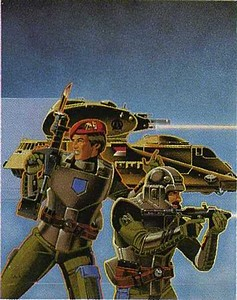
All of this is to say, my Star Trek is much more Nick Meyer than Gene Roddenberry. And if you look at Star Trek the some way some folks cherry pick their favorite parts of various holy books, you can see that my Trek has always been a part of Trek. For instance, some folks insist there were no enlisted crew aboard the Enterprise, each member was at least an Ensign. Thing is, a bridge character in The Cage was Chief Petty Officer Garison, Crewman Green in The Man Trap was a crewman, and in Charlie X Tina Lawton is introduced as a Yeoman 3rd Class. When I got to High School, I became a cadet in the Marine Corps JROTC- so I learned a lot about the traditions and histories of the naval services. Of course I used the Marines that were listed in the Starfleet org chart in FASA Trek. The Mandela Effect ensured that I saw that entry on the org charts in the classic Franz Josef Star Fleet Technical Manual, but alas.
Since FASA Trek has a lifepath-type character generation, and the enlisted generation method in Trader Captains and Merchant Princes was... not optimal, I wrote my own process for training enlisted crew, and I gave them Navy-style ratings since I'd heard Tina Lawton called a Yeoman Third Class. So my game had Science Technicians, Warp Technicians, Torpedomen, Quartermasters, Operations Specialists, etc. Even Culinary Specialists and Starfleet Counselors. Every ship had a "Chief of the Boat" who served as senior enlisted to the Captain. My Starfleet was decidedly Naval, as presented in Wrath of Khan and the FASA books. Most of my games dealt with the Cold War between the Federation, Klingons and Romulans. FASA lost the Star Trek license shortly after producing their only two Next Generation books, and there was no new Trek RPG in print, until...
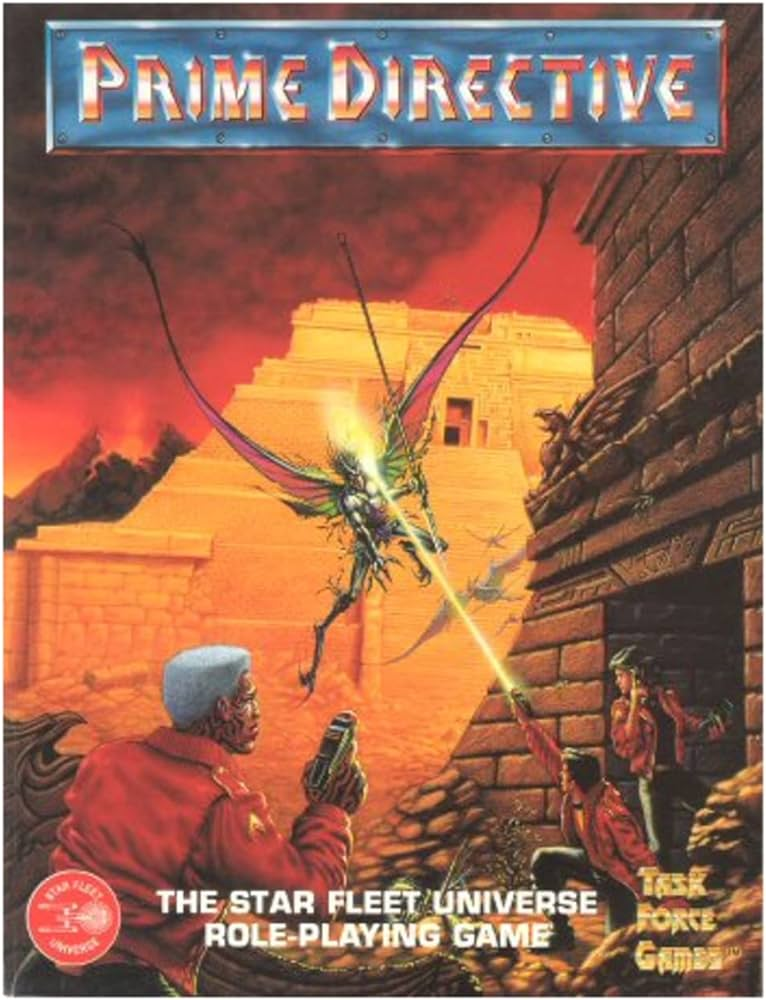
The year I graduated, Task Force Games/Amarillo Design Bureau released Prime Directive, and if Roddenberry felt FASA Trek was too martial, it might be a blessing that he passed away before the release of Prime Directive. Set in the alternate Trek universe that was created to support the game Star Fleet Battles, Prime Directive was concerned with a neat concept - Prime Teams. Why beam down your Captain, XO, and next four senior people into an unknown situation when you could have a purpose-trained "Novel Contact Team" to beam down for you. Purpose-trained, possessed of multiple skill sets, and oh, yeah, more expendable than your Captain and the next five most senior personnel. Character creation had players choosing between Naval and Marine personnel, and it was possible to be an officer or enlisted member of either service. The setting, as it was created to support the outright wargame that was Star Fleet Battles, was heavily militaristic in nature. The sample fiction in the rulebooks mentions saluting, bracing to attention for an officer, and other formalities rarely or never seen in Star Trek. Needless to say, my Prime Directive games were right at home in the kind of Trek universe in my head. Prime Directive was a shift in some elements of my games, as it was set during the TOS era due to specifics of the sub-license that allowed it to be created. I had run most of my games in what we used to call the "Movie Era" - Star Trek II up to, say, Star Trek VI. Or the current film if you rewind to my earliest days as a gamer. Also- Prime Directive had a completely different set of species in play. Rigellians and Alpha Centaurans were absent in FASA Trek, so, too, most of the Klingon servitor species. Hydrans, Lyrans, Wyn, Kzinti, all new options for NPCs and, rarely, players. This game became sort of Star Fleet Navy SEALS. Ish. And we dug it.
You might ask what I did with The Next Generation? Well, I started with the TNG First Year

The Officer's Manual had a lot of things that would be retconned by later TNG. Pay for Starfleet members, some apocryphal starships including the Ambassador Class that looked like neither Doug Drexler's nor the Enterprise-C's versions. Data having some sort of reactor core. The shipboard position of "Crewmaster" who was responsible for the civilians onboard. Oh, and the rank of Ensign, Junior Grade. I used most of it, because we didn't yet know any better. But oy, did some of those ship designs look janky.
By the time Last Unicorn Games released their Star Trek offerings, we were ready for a different take on Star Trek. But we always seemed to come back to FASA Trek and Prime Directive. Only with the recent move to Modiphius and their 2d20 system have my players and I found a Trek we like as much as these older iterations. And still, I just finished running FASA Trek at North Texas RPG Con. I toned down the hyper-naval feel of my game, but many elements we used to use were still there. Half the pregen characters I created were not officers. The ship was a Larson-class destroyer, assigned to Military Operations Command (as opposed to Galaxy Exploration Command.) The players said they had a lot of fun. I plan on running again next year. The takeaway is, my TNG games tended to be less martial in nature than my TOS-era and Movie-era games, and those tended to be The Navy in Space. Just as Nick Meyer intended, and Gene Roddenberry resented.

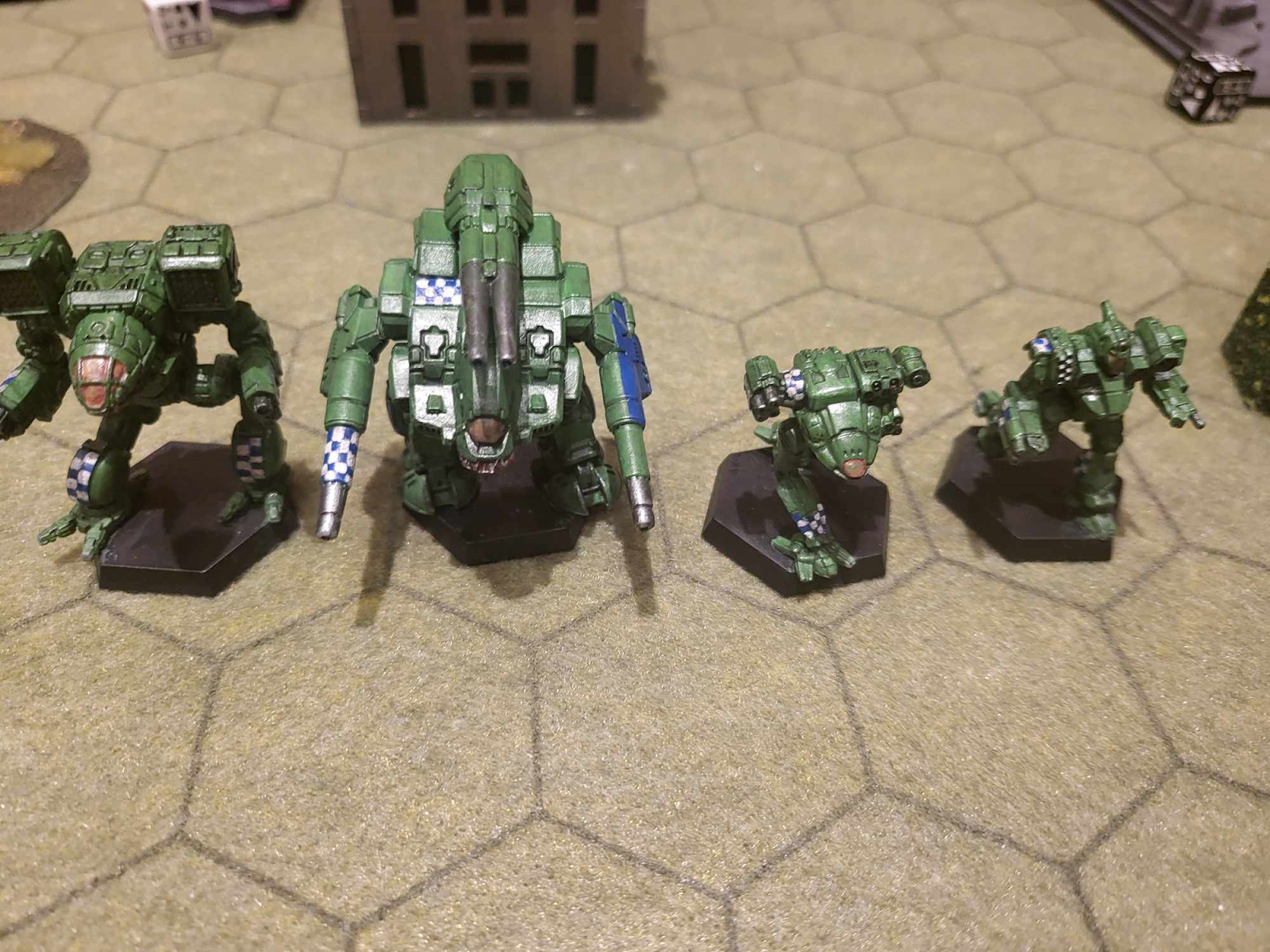
I have to admit, I'm a sucker for a thematic subsystem. A conceit within a game's rules that is there to model a certain part of the genre addressed by the game. Sometimes, especially in older games, these subsystems can feel clunky, tacked-on, even arbitrary if the reader doesn't see the setting or genre the same way the game author does. But just as with the core rules of a game, there are threads of the intended world coded into these rules and subsystems. These modules themselves both tell you something about the world, and give your players some actual rules to grasp onto to interact with the intended world. So, what the hell am I yammering about? Let's take a look at some of the subsystems that I love to this day.
First, what do I mean about the rules telling us something about the game world? Let's take a look at the good old "wandering monster" mechanics from D&D and many other games. These mechanics usually have dice being thrown at regular intervals of in-game time or distance travelled, and if the result indicates an encounter, another table or set of tables inform the GM what specific people or monsters are encountered. This can also tell you how common or uncommon certain encounters are intended to be in the world in which you're playing - in Traveller, the table of spacecraft encounters gives you an idea of what ships are the most commonly encountered. In D&D, a look at the table for the terrain in which your party travels tells you what creatures are the most likely to be encountered in that area. Taking into account the frequency of a given encounter on the table, and the frequency of encounters happening at all can give you a good idea of what an area is like, how hazardous it is to travel, how friendly others along the route are likely to be. Remember, not every encounter is with someone who will want to fight you.
One could argue that random encounters are probably a core rule of a given game. What I want to talk about are subsystems that do what I outlined above, but a bit more explicitly.


Gangbusters
This TSR classic has some fun subsystems in place to help model the Roaring 20s Prohibition time period. My favorites among them are the criminal ones. Want to run a numbers game? Rules are in place for running one - and for running one that's rigged. Want to set up your own brewing or distilling operation to sell bootleg hooch? Subsystem exists to allow you to do so. Want to run the speakeasy where the illicit booze is sold? Rules are here for how many patrons you serve, how much alcohol they drink, and how many dollars you rake in from your scofflaw practices.
This is really what I'm talking about - each of these subsystems might appeal to a different player, and give them each an activity they can do as part of an adventure, or between adventures. Maybe your players form a syndicate, and one player specializes in the production, and another in the distribution, while a third handles the games of chance that just happen to be run inside the speak while people are drinking their fill.

Pendragon
This game just drips with genre emulation, but one thing that jumps out to me as a neat subsystem is the Winter Phase. Each adventure is assumed to take place during the summer, or adventuring season, with the knights returning to their manors for the winter. During the Winter Phase, a series of die rolls are made to see what happens. Does your knight find love? If already married, is a child born? Are the horses healthy? How much income do the lands bring in? Was it a good harvest?
The Winter Phase tells a story that adds to the knight's adventures, and perhaps creates impetus for further adventures. It's both extremely pertinent to the intended feel and tone of a Pendragon campaign, and something players can look forward to and attempt to manipulate to greater fortune.
Virtual Realities for Shadowrun

So there we go - some examples (without going into specific detail) of the kinds of subsystems I love in my games. Shadowrun was great at having them for several character types - Shaman could build out their medicine lodge, Mages their Hermetic libraries, both could seek Initiation, and form magical societies. Riggers could customize vehicles and drones. Things that can give characters goals, and something to do between sessions. Others are used during game, like Starships & Spacemen's computer and starship rules. In BECMI D&D, there's domain management, and the War Machine mass battle system. Add in the Republic of Darokin Gazetteer, you can build a mercantile empire. Hey, the trading rules from Traveller have led some of my players to create their own cargo shipping lines and dealing with the growing pains of a fledgling line, and piracy, and customs agents. The best kinds of subsystems support the feel the game is going for, and feel like FUN to the players, and add to the narrative.
Good Lord am I bad at this blogging thing. Or maybe I'm just bad at the whole Life thing.
Since my heart surgery, it's been hard for me to get back to where I used to be mentally. What I found I really wasn't prepared for was the brain fog, the loss of words mid-conversation, the inability to really focus and stay on-task. It was extremely hard for me to finish my part of the Dominions of Steel manuscript in the fall of '22, as I was still in recovery from the surgery and in no real shape to "brain." Apparently, being on a heart-lung machine while my actual heart was physically outside my body caused a condition referred to as "pump head" by folks who have had Open-Heart Surgery. It's caused me to be fairly scatterbrained.
I'd love to stoically plant the haft of my polearm in the dirt and say "That stops now." But I can't, I really don't have any control over the ongoing effects of pump head. But I am learning I can try to power through the fog and get stuff done. Stuff like starting a YouTube channel that I hope to make a companion to this revivified blog to put out my thoughts and feelings on tabletop gaming. To that end, I've used the Tasks reminders so thoughtfully provided by our Google overlords to set goals of posting here on the 1st and 15th of every month, as a bare minimum.
So, here we go. I'm going to post this little letter, then write a game-related post to get the reboot started.
Well, the health update earlier this year was only part of the story.
On 28 JUN 22 I had open-heart surgery. Turns out, I needed a 5x bypass. I'm back on my feet, but I'm still in recovery. My body is bouncing back, but I had no idea that heart surgery had a potential for cognitive impairment, emotional issues, and traumatic stress. That part caught me by surprise, and I'm still trying to recover/adapt to my "new normal" in a mental sense.
I've never been as regular at blogging as I'd like - but I've basically been granted a "second chance" since without the heart surgery, I was a goner. The phrase "walking time bomb" was used by my cardiologist. Talk about words that make your blood run cold.
My first published RPG is coming out in 2023, the manuscript has been submitted, edited, resubmitted, and is now in the hands of the layout and art folks. I am a partner in a new game publisher, Retro Arcana Games, and we will be launching a web site and podcast in December of 2022. I will be writing content for the Retro Arcana site, and dual-posting it here. With any luck, there will be some more content here for folks to read. I want to make the most of the bonus time I've been granted.
Well, yesterday was 4/20, and the only thing 420 about me was my blood sugar. OK, it wasn't 420, but it was between 200 and 280. I've never been good at blogging regularly, as the spotty nature of this blog will show, but this year I've had issues with focus, and extreme fatigue, and now I know why.
When I was diagnosed diabetic, my doctor basically said "Well, you're diabetic. Avoid carbs." That was it. No diabetes education, no instructions on how to take my glucose, no instructions TO take my glucose. Nothing. So I did what I was told, watched my carbs, took my Metformin, and took my Ozympic. Eventually, we got my A1c down from the initial 13 (!!!) to 7.2, almost where we wanted it. But by this point I was really frustrated. For my A1c to be 13, I would have had to have been diabetic for a while. I had mentioned things to my doc that in hindsight, now that I know my condition, should have been big red flags. My office mate and co-author Bobby even called it because of all the tea and water I drank while we were in office. So, I changed doctors, and got a CGM (constant glucose monitor) and learned about my condition.
The CGM was wildly inaccurate for me. But we got my A1c down to 5.5 and later 6.5, and it seemed my diabetes was well-controlled. Due to my frustration with my inaccurate CGM, I did something stupid and stopped taking my glucose. I figured with my A1c between 5.5 and 6.5, I was in the zone. Well, I didn't account for the effect of getting off my weekly Ozympic shot. Then I got so involved with taking care of all those things in life we take care of, I missed a 3-month checkup. I started to feel really tired, all the time. I lost my ability to focus, I could barely complete my work, barely work on my game design, barely get all those parent and adult things done that were necessary to keep the household running. It got so bad I couldn't make it through a day without taking a nap, or at the very least nodding off here at my desk.
My A1c had jumped back to the double-digits. It's no wonder I had no focus, no energy. So my new doc, wonderful as she is, prescribed me a new CGM, one that we have verified against finger sticks and put me back on Ozympic. I got a CT scan to make sure my high triglycerides and blood sugar haven't messed with my heart. I'm back on a strict diet, not that I was eating tons of carbs before, and drinking water and decaf tea. The thing that has been frustrating, is that my first time around I wasn't taking my glucose, so I had no idea it would take weeks to get my blood sugar back under control. I kinda thought a couple of days of water and salads and my glucose would be back in the pocket. Naïve, I know, but...
Anyway, that's where I've been. But I'm really missing being involved in games and gaming. I'm going see if I can't crank out an article or two to get back into the groove.
So, here is the part that gets ridiculous. Classes. There are so many neat classes beyond the classic seven in BX, and they come from many different sources. OSE Advanced adds the AD&D classes, like Paladin, Ranger, etc. Rules Cyclopedia lets me add the missing Monk with the Mystic class. The Class Compendium by Barrel Rider Games has some classes well worth looking into - like the Commander, the Undead Slayer, and the Metaphysician. But how many is too many?

Jeez. Over half a year since my last post. Thanks, pandemic depression. I was bad before the plague, but not this bad. But hey, I'm here, I'm writing, so here we go.
Last week I attended North Texas RPG Con, and it was a much-needed breath of freedom and return to gaming in person. NT is a big family, and we all revel in the love of old-school games. This year I got to play three games for the first time that I had never before tried: Champions 4th Edition, Gamma World 1st Edition, and Chainmail. I thoroughly enjoyed each and every one of these games, but I felt like I needed to write my feelings on Chainmail as it is a foundational piece of the original 1974 D&D rules.
Thanks to the debacle that was RPG Labs and the ill-fated video series I was involved with, I have played 1974 D&D using the Chainmail combat tables. It was extremely illuminating to my understanding of where many of our terms and mechanics come from. But I'd yet to actually throw down some miniatures and play out a battle using Chainmail. Our referee was Paul Stormberg, who deftly explained the basics and gave us the choice of three armies - Europeans, Mongols, and... I can't remember because they didn't get chosen. My was teamed with James and his daughter Neve, who we quickly named our General. We grabbed the Mongol army. Our opponents, the Europeans, were Robin, David, and Scott.

Our opponents had two units not available to us: a pair of knights, much higher quality fighters than our infantry, and a 10-figure unit of crossbowmen. These gave us beaucoup trouble, as you'll see here in a moment. After unit selection came terrain. Paul had us draw four random terrain features from a deck for each side of the map, and drew the indicated features onto the battlemat with a wet-erase. We ended up with a battlefield that had two hills facing one another on the eastern end, relatively flat terrain through the middle, and a hill opposing a marsh on the western end. Center-right on our side was a ditch Paul ruled we could use to conceal troops- but they could only exit into the center of the map, northward.
General Neve listened to her advisors, and decided to conceal our horse archers in the arroyo, our medium horse behind the hill, and our archers just beneath the summit so they could deploy to the northern face of the hill and take advantage of the range bonus they would get from elevation. Once we deployed (or didn't, as none of our troops were visible) the European team deployed. The odd thing is, we were able to deploy hidden units, yet we were somehow the attacker... Anyway...
 The Europeans send their medium horse off to their right flank, but brought the bulk of their force face-to-face with our army holding the hill. Their infantry charged, and we cut them to pieces with concentrated arrow fire. That was the best result we got for the entire engagement, for it was at this juncture our opponents realized their crossbowmen outranged our archers by several inches. They moved up and starting showering us with arrows.
At this point, we revealed our horse units, and charged with our infantry. The idea was that the crossbowmen would have to split fire or choose one or the other threat to deal with. They countercharged with their heavy horse, and our medium horse met them after some archery shenanigans. Our infantry was reduced to two figures, who then refused to fail a morale check and fought to the death. Our horse archers did respectable damage with their bows, but got in too close and were engaged in melee by the European medium horse. The force mismatch in both cavalry battles meant our cav didn't last too long. Victory: Europeans. But General Neve's forces did quite a bit of damage before accepting defeat.
So, now that I've played Chainmail, how do I feel about it?
This game is definitely an artifact of it's time. There are many charts and tables, and different mechanics for different troop types and engagements. This makes it difficult to get a hang of the game for a first-timer. I imagine if I played it more often, I'd get the hang of it. Sometimes the results were static, and sometimes random. That was interesting, and made me want to look closer at the troop versus troop tables to see if there were combinations that offered a guaranteed disadvantage. Medium Horse versus Heavy was brutal, as was Light Horse versus Medium. Archery was suitably brutal, and the crossbows trading the ability to fire twice in a turn (once as a reaction and once on their fire phase) for range was certainly a compelling choice.
I found the amount of movement cavalry had to sacrifice to change direction extremely restrictive. 1/4 move for up to 45 degrees, 1/2 move for 46 to 90, and all movement for 180 degrees. This seemed overly restrictive given the ranges of our cavalry on both sides, and had a major effect on the employment of the cavalry by the combatants.
So... would I play it again? Sure. Especially if I was playing with others who are exploring it for the historical context. If I am going to play a miniatures game for its own sake, this would probably not be my first choice of rules set. But it was enjoyable, and informed my feel for what people were playing as our hobby dawned.
Nothing remains quite the same.
As I write this entry, I'm sitting in my game room. Or, what was once my game room. Over the last year this space has transformed into a home office, schoolhouse, and dumping ground for everything else in the house on its way to or from storage, or Home Depot or Ikea. The Pandemic has done a number on this room, and I feel like my soul resembles this room quite a bit. In the same way that Strahd von Zarovich is the land, I feel the state of the One-Eyed Ogre, as we call the game room, mirrors my mental and spiritual health.
I, too, am cluttered. I, too, and pulled in so many directions. I'm serving as an educational paraprofessional to both kids- one of which is ADHD, the other in the throes of puberty and pre-teen angst, and both dyslexic. I'm trying to keep my actual job duties rolling, which requires doing my work on evenings and weekends most weeks since my days are filled with keeping the kids awake (Zane) and on task (both, but especially Kaylee.) We're doing some necessary remodeling after our 40-year-old guest shower tub cracked right through the bottom, and that project has experienced some mission creep. We're just fortunate we have a friend who is a Master Plumber and he knew a great tile person. On top of that, we're trying to refi the house to take advantage of the ridiculously low interest rates, and pull out some equity to refit the rest of the house, since moving in the Austin housing market is priced for people who make a lot more money than I do, or people willing to live a lot farther out than I am. Add to that the insane amount of social and political turmoil that has wormed its way into the tabletop community just as it has every other facet of American life...
So what does this have to do with gaming? Quite a bit, on a personal level. I find that I lack the capacity for the way I gamed before all of this set in. And by all of it, I don't just mean the pandemic, I mean all the politics, all the associated stresses, me sitting here instead of my office on campus, all of it.
Before all of this, I'd run any game for any group. As a founding member of the Royal Dragoon Guards, way back when we were the Caladan Highland Dragoons, I have run big games for big groups for 25 years now. As the main GM all that time, it has been my duty to entertain the masses, and for the most part I loved it. I still look back at those unwieldy games where we had 15, 20 players or more in massive MechWarrior RPG campaigns that had Battletech battles that took up an entire activity center floor at our apartment complex. Our campaigns felt like the early novels, and we were like the Kell Hounds or the Gray Death Legion. It was glorious. Many Arby's 5-for-5s and Taco Bell 59/79/99 menu items died to bring us those days.
As we got older, our games got less ambitious, with the first RDG campaign under that name having only 17 players. Then we broke into smaller groups, and branched out into games aside from MechWarrior. This drew in more players, and somewhere along the line I ended up being the backstop GM. Other GMs had a solid stable of players for their games, and I ran the games for whoever was left. Which was more often than non a revolving door of casual players, who may or may not consistently attend. This also meant it was very difficult to do things that weren't one-shots or at most West Marches-style games. It started to erode my morale a bit, but I have always been a "The Show Must Go On" kind of GM, so we kept it going.
Everything shutting down had some unexpected effects. With our technology, we should have been able to just transition to Zoom or Discord and keep rolling, and we tried that. But the lack of in-person contact made meetings feel off somehow. Individual groups kept gaming, but as a whole our group fractured a bit. Pandemic fatigue set in, and it was hard to get enthusiasm for anything. We offered several online options, and very few of them were put to use with any enthusiasm. When we got to election time in January, the group decided to call 2020 a do-over and just let the 2020-2021 staff roll into 2021-22.
I tried running a 5e campaign. It died. I tried running a couple of other games, they never took off. I got a Star Trek Adventures game going recently, and that's showing some promise as the pandemic thaws. But for months, I was without a regular game, and in some cases even one-shots or anything, and I started to think about my role as the Game Master by default over the last 25 years.
I realized I'm tired. I'm frustrated. And the kind of gaming I was doing right before the pandemic happened wasn't really satisfying me then. What I need is to get back to what drew me into gaming in the first place. I need to get back to playing for the love of the game, with good friends, and an ongoing story. Crafting a tale together that we will recount over drinks for years to come.
And it doesn't have to be anything fancy. A scrappy group of mercenary MechWarriors, a bog-standard BX Dungeons & Dragons campaign. Maybe a Traveller game with elements of Firefly and Cowboy Bebop.
Or maybe fancy would be cool. Run Dragonlance, the original campaign. Or Beyond The Mountains of Madness for Call of Cthulhu.
Dig up old favorites, like Marvel Superheroes, Gangbusters, Star Frontiers.
New hotness like Against the Darkmaster, Dune, or Astonishing Swordsmen and Sorcerers of Hyperborea.
There's always Dungeon Crawl Classics and Mutant Crawl Classics.
But the bottom line is, no matter what I run, or play, I want to make sure of a few things. The players have to be onboard with the genre and tone of the campaign. I am so sick of dealing with players that create characters completely unsuitable for the game being pitched. If a game isn't your cup of tea, play in or run a different game. If the GM and five out of six players want to do The Hunt for Red October, don't do Down Persicope. Run your own Down Periscope game, and make it the funniest, most irreverent game ever.
Gaming is a group activity, and it's time I ran games I want to run again, rather than selecting my game and players based on entertaining the maximum number of people with the lowest common denominator game. That's part of the job as president of a big gaming club. I know that, and I've done it for many years. But for me, myself, I've got to get back to what I love about games and gaming. I've got to pitch games I want to run, and run them for the players who are interested in that game, genre, and tone. And if one or two individuals aren't interested, that's fine. There will be other games, other GMs, and other players. I have been of the mindset that I need to cater to the masses in the name of keeping the club as entertained as possible. And I think that is still a worthy goal- but it should be a goal that is shared with other Game Masters and not on the shoulders of any one person.
And at this point, coming out the far side of a year-plus without sitting at a table and rolling dice? It almost feels like rebuilding from scratch anyway. So, maybe the silver lining of this dark cloud is that we rethink the way we do our games as an organization, and do them more like regular campaigns.

As a younger gamer, I enjoyed ever more complicated games. Basic D&D took me to Advanced D&D, Palladium Fantasy, Rolemaster, and GURPS. Palladium had a different fighting style for each fighting class (this was before the RIFTS-ification of their 2nd edition), Rolemaster had those amazing critical tables, and GURPS combat rounds were second by second, with an allegedly "realistic" approach. I ate it up. Loved every minute of it. On the not-fantasy side, I loved crunch in other games. I built many ships for Star Trek and Traveller, designed BattleMechs and Car Wars cars, and even tinkered together my own set of rules for the old Wheeled Warriors toys to give stats to all the interchangeable gear included with the toys.
At the pinnacle of this love of crunch in my rules, I had a spreadsheet for tracking maintenance hours for a BattleMech company, down to assigning individual techs to individual 'Mechs and prioritizing certain repairs. I had a set of parts compatibility rules for BattleMech parts - need a knee for your Wasp? Well, that Stinger knee is nearly identical, but the Locust knee will need a lot of modification. I had a spreadsheet to calculate the prices of parts and ammo depending on location within the Inner Sphere - it took the table from MW 1e and expanded the variables to include Traveller-type planet classifications. I even used The Robotech Reference Guide to engineer GURPS stats for Robotech weapons by mathing out explosive yield to mega-joules of energy and cross referencing that with GURPS existing stats for sci-fi weapons, and their rules for damage based on TNT.
I look back now, and I'm proud of about half of it, and horrified that I wasted time on the other half. This brings me to where I am now in my head.
There is still a big part of me that wants to know if the players are carrying enough rations, water, arrows, etc. for their journey. I played enough Oregon Trail as a kid and did enough backpacking in Scouts to feel like being prepared is an integral part of any adventure. I like the need to plan an expedition, to give the situation some thought. At the same time, though, my gaming time is extremely limited in comparison to my younger years. Gotta get the bang for the buck, time-to-fun-ratio wise.
Enter my growing love affair with BX and derivatives thereof. The Basic/Expert rules set is cleaner (arguably) than Holmes, is the bones upon which the BECMI edition was based, but only goes to Level 14 for humans, rather than the 36 of BECMI. This has many effects, not the least of which is a less punishing (but still frustrating) Thief skill progression, less disparity between the Demihuman class level limits vs. humans, and less of a massive gulf between starting characters and max-levels. Remember, Level 3 is more or less a fully trained professional if you take the level titles into account, like Priest, and level 4 is Hero according to the Fighter progression.
The more I read the editions before mine, the more I grew to respect their place in the D&D lineage, and understand more about the hobby as it was, and as it is now. Now that I've played the original 1974 rules with Chainmail, and Holmes, and Moldvay, I find that there are things I enjoy quite a bit about all of them, but especially Moldvay's BX. This has been cloned quite a bit - Labyrinth Lord, B/X RPG, and more. But the version that has stolen my heart is Old School Essentials.
Now, I won't turn my nose up at the D&D Rules Cyclopedia as my "Desert Island" all-in-one-volume book. But I find that I rarely use levels above 9 or 10, if that high, and that while I love The War Machine rules for mass battles, I don't use the weapons expertise rules as written in BECMI as they are sometimes quite overpowering to the campaign, especially at high levels. This is where the current single-volume version of Old School Essentials comes in. OSE takes the form of a smaller-than-standard book, A5 or Digest size, clocking in at 296 pages. It's got some color plates, and sewn-in cloth bookmarks. Swanky.
Why choose OSE over other implementations of BX, or BX itself? Well, it's a one-volume hardcover that takes those rules and restates them with 100% fidelity where possible, and when there were contradictions between the Basic and Expert rulebooks, or between two entries in the same rulebook, a decision or correction was made. The end result is an eminently easier volume in which to find things, with a full index and straightforward organization. There is also a player's version of the rules, with the DM-specific information excluded.
This book gives me a solid foundation for a simple D&D game that lacks the arcane complexity other versions of D&D, even other vintage versions, include. AD&D is something I also love, and OSE scratches that itch as well with their Advanced Fantasy books. These take the BX core and add concepts from AD&D to it. So, this isn't OSRIC, it's not a rules-faithful AD&D clone, it's a rules-faithful BX clone with AD&D concepts. And that's... pretty cool, actually. Like, if you want full-on AD&D, you can go with AD&D or OSRIC. But if you want something where you can remember all the Ability Score modifiers in your head, go OSE with the Advanced Fantasy books.
There is a big part of me that wants to go back to the simplicity of a straightforward fantasy campaign like the ones we played in the 80s. Like the pure joy we see in the Stranger Things crew or Michael's friends in E.T. gathered around a table and rolling dice. I am those kids - I remember many carefree evenings and afternoons with close friends, tossing dice and slaying foul creatures. Before I had to worry about bills, or pandemics, or diabetes. Hell, all we worried about back then was nuclear annihilation. No big.
I'd love to sit down with a band of chosen family, roll up characters, and save the world Old School. I think the BX iteration of D&D strikes a pretty clean balance between enough rules to do stuff, and not so many rules as to get in the way. I still love my BECMI, but 36 levels is just excessive in practice. I say that, and still want to run a game where the players ascend to immortality. Maybe I can make that happen at BX levels... Hmmm...
Anyway, Old School Essentials hits a sweet spot with me. A nice, well-organized hardcover that can supplement my Lulu one-volume prints of Moldvay Basic and Cook/Marsh Expert. Thumbs up from me.
2nd Edition was around from 1989-2000, when 3.0 dropped. An eleven year stretch, currently second only to 1e, 1977-89. As I mentioned before, 2e was my jam in High School, seeing as it came out the year I started my Freshman year. Fittingly, for my personality, I was the final class to be able to say they started High School in the 80s. This was a very formative time for me as a gamer and as a person, my high school and first round of college years. I got married during 2e's tenure, so one could say I literally grew up with 2nd Edition, and all these years later I still love it. I have grown to appreciate other versions of D&D on their own merits, of course, but 2e is tied with Basic (BX or BECMI) as my favorite D&D.
Now, 2nd Edition had a lot going for it. Personally, I loved the original presentation of the Monstrous Compendium, in a big three-ringed binder full of monsters each of which had a full-page or more entry. In practice, one needed a lot of those little hole reinforcement stickers to keep pages from coming out, but in theory one could add pages to their binder, like the Forgotten Realms and Kara-Tur packs I purchased. Along with 2e came the brown leatherette splatbooks. The Complete Fighter's Handbook, The Complete Wizard's Handbook, etc. Books for Demi-Humans, books for setting-specific classes like Ninja and Shi'ar, books from the green historical line, like Rome, and Charlemagne's Paladins.
THIS was 2e. It went everywhere and did everything. The Realms, Dragonlance, Al-Qadim, Maztica, Spelljammer, Planescape, even my favorite setting of all time, Mystara, got some 2e support. And yeah, Ravenloft. My other favorite setting. It's no wonder we had such a blast with 2e, as there was so much of everything to inspire and inform our games. Too much, from TSR's financial standpoint. But that's not really what I wanted to talk about.
To me, 2e was everything I had wanted in a Dungeons & Dragons game at the time. The rules we often see as clunky in hindsight were fine for those of us who grew up with 1e and Basic. In fact, they were a genuine improvement in many cases. All the support materials were just icing on the cake- and a crap ton of icing it was. But then something happened that really upset me, and to this day I'm only partially sure why. 2e got a facelift, and I hated it.

The core books were reformatted and given a new trade dress in 1995. Gone was the natural progression of cover design from the 1e redux to 2e, these new "black border" covers just felt... off. And the interiors? Ugh. Gone was the iconic artwork of the original run of 2nd Edition, and the new layout went from the friendly blue and black to a more aggressive red and black. The font styles changed to a less readable style, and on the whole made the entire corebook line look closer to what the later Ravenloft-themed stuff looked like. It just felt... wrong. Now, the art isn't bad, at all. Both covers were done by the legendary Jeff Easley. But the tone of the art was... different.

Why do these updates offend my sensibilities so? You got me. I mean, I have something I like in each and every edition of D&D. Of this one I can say, well, it's 2e, and it includes any errata that had been compiled at that point. But above and beyond that, I just really feel repelled by this incarnation of the game, and was doubly sad when the commemorative hardcovers were released using these versions of the book interiors. Second Edition is blue and black, dammit, and if there's not the Elmore painting of the proud dragonslayers just inside the PHB, it's wrong. Now that I'm looking at the covers and the interiors side-by-side for this article, I do see something I can put my finger on. The first version looks bright, optimisitc, action-oriented. The second looks dark, desperate, and gritty. To be fair, Dungeons & Dragons can be both, sometimes in the same campaign, or the same adventure. But flip to the interiors, and that theme persists. The art and interior design of 2.5 is more subdued, and made harsher by the red chapter and section titles and borders.
So, even as 2nd Edition waned, and Wizards of the Coast purchased TSR, and I finished my AA and ended up unable to pursue my Army career due to Obstructive Sleep Apnea, I still clung to my high school version of AD&D 2e in what might have been my first expression of unreasonably hostile grognard-ism. I can say that at age 45 I realize I am being unreasonably judgey about what is essentially a cleanup and re-release of one of my favorite versions of D&D. There's nothing rules-wise wrong with it. But the look? The feel? All kinds of wrong. At least to me.
2nd Edition's tenure brought me so many things I love about D&D, though. I read the 2e splatbooks for fun, they had so many great ideas that were executed with more or less effectiveness. The Priest book even had some kits that were explicitly less powerful than the average Cleric, which I found neat. I mean, not everyone is a hammer-wielding, heal-casting badass. Kits allowed some great fluff and options to keep the base classes from feeling samey. And the settings - holy crap the settings. SO MANY SETTINGS. My favorites to read were Ravenloft, Maztica, and Al-Qadim. Sad thing is, I've only ever met one other hardcore Al-Qadim fan, and none who liked Maztica. So Ravenloft is all I've ever gotten to really run.
Here's a problem with my burning out on 2e due to my prejudice against the 2.5-themed products. I missed out on some truly cool stuff. Decades later, in 2019, I discovered Jakandor. This mini-setting flew under my radar as I was abstaining from buying stuff with that 2.5 look. It was an attempt to turn some AD&D tropes on their head, and it succeeded. I devoured it as part of a web project I was involved in (that crashed and burned) and discovered that I had really missed out on a cool bit of D&D history. I've looked back to see if I missed anything else cool.
When I met my wife in 1997, we weren't playing AD&D, we introduced her to tabletop roleplaying with West End's Star Wars. She wouldn't make a D&D character until 3.0 was a brand new thing in 2000. So that sort of sums up the end of my 2nd Edition Stretch. It was, and remains, a favorite of mine, though I am struggling with my blind spot for its closing years.
